


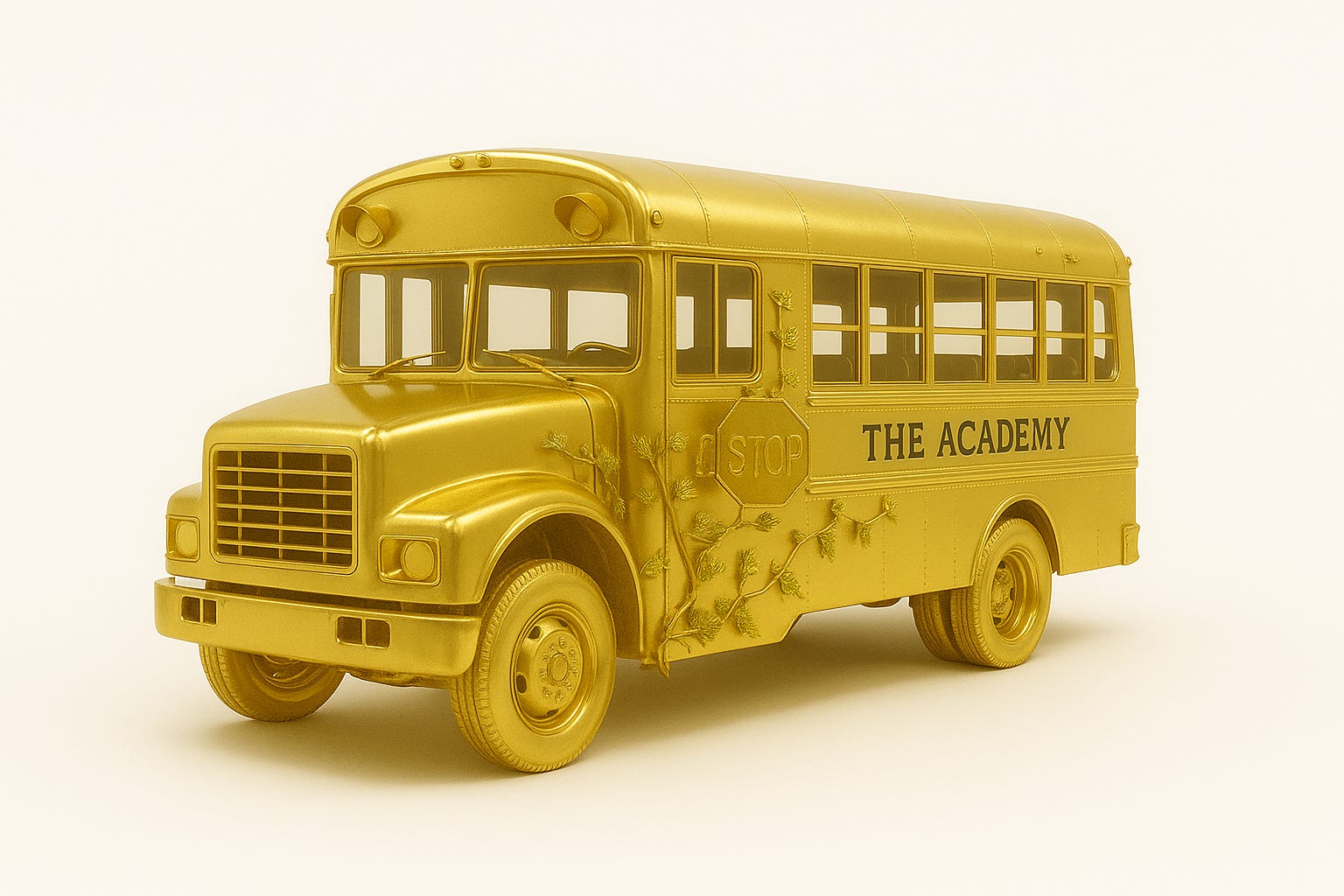
Are independent schools defensible? Do they serve a noble purpose in the scheme of greater education, or does their reach only extend as far as their private interests? It's easy for this to feel like an exercise in self-assurance, an opportunity to explore the ways in which one can argue that independent schools are more than businesses with a basic priority: remain financially strong. How often do you hear of a school, like Jhamtse Gatsal in the 2014 film Tashi and the Monk, that gives up one meal a week to feed impoverished people in the local area? How often do you hear of an athletics program that advertises its modest facilities and equipment? How often do you hear of a school that deliberately goes without so that a community with less can go with?
What I am going to suggest is simple. Many will call it idealistic or naive. And I assume many more will think it a horrifying and foolish concept altogether. I believe independent schools should give people a look under the hood. I hesitate to use the expression "see how the sausage is made"–it implies something gross is happening, something that is better left unseen. However, with the exception of information that should remain confidential to ensure privacy, I don't think schools, institutions designed to educate children, should have anything to hide when it comes to the way in which they operate.
What does this look like in practice? In my role, it might look something like this:
My interactions with students are appropriate and professional, and I would be comfortable with any student's family observing the way I speak to or treat their child.
My approach, as it pertains to behavior management, student motivation, and culture building, is based on educational research and evidence.
Anyone who is interested can better understand my educational philosophy because I articulate it clearly in writing and demonstrate it in practice.
My educational philosophy is open to analysis and revision when new information prompts a need for growth or change.
I collect data that demonstrates the effectiveness of my educational approach that I can share with the public, while maintaining privacy.
I collect data that demonstrates the fair and equitable treatment of students (or lack thereof), regardless of their background, status, or identity.
My work with students promotes the public good, including community outreach and a commitment to engaged and responsible citizenship.
This may not be a comprehensive list, but it's a start. I'm going out on a limb here, but I imagine prospective families and potential donors would be excited to work with a school that expresses values of transparency and integrity. And if school leadership or the board or alumni or parents want a school that offers a "best-in-class" experience with all the bells and whistles, go ahead and sell that product. There's a market for it. However, if we are going to talk seriously about independent schools communicating their public purpose, then we need to begin where the rubber hits the road.
Take the admissions office, the development team, the academics and athletics and student life departments, and decide what it means to look under the hood. If you see a rusted part, a fluid leak, or some frayed wires, consider addressing those trouble spots first. Schools should not be in the business of luring families into faulty vehicles. In that scenario, the value of independent schools is exclusive at best, harmful (and sometimes traumatizing) at worst. And for what? For the selfish practice of "dream hoarding" (more on this later)? For a tradition of "excellence"? For the endowment of the school's lineage, rather than the greater good?
Forgive me if I sound sarcastic or cynical. I've had that problem most of my life. I'm trying to be honest, not negative, as I too believe in the value of independent schools. Concurrently, I also believe it is imperative that we understand, especially in the private sector, that we do not exist without the public. Just like public schools, independent schools depend on the success of democratic principles and nations, they depend on global cooperation and peace, and they depend on independent people having the financial independence to fund them. This question of the value to the public is existential. And I imagine schools that don't have a good answer, or instead have a deceptive one, will not stand the test of time.
There is a place for independent schools, but it must be alongside public schools, rather than above them. For if the public fails, the foundation, not just of education, but of society, crumbles. There is a divide in desperate need of a bridge, one that is most clearly measured by wealth. I wonder if we shouldn't be a touch more critical, or skeptical, of the word choice "independent." Should independent schools be planting their flags in their dissociation? Might we consider referring to them as "partner schools" or "associate schools" or anything that doesn't emphasize a disconnectedness from public life?
Again, I am not arguing that all independent schools, when you look under the hood, are hotbeds of corruption, deception, and greed. It's easy to generalize, and perhaps a little pleasurable to write off everyone involved in these institutions as ivy-dripping, ivory-towering, and, while we’re at it, rhino-poaching elitists. We know that's not the truth, and we also know independent schools are not dependent on lots of things, such as teaching certifications, an obligation to serve the public, and shared curriculum standards. That's not to say these things don't exist at independent schools, just that they aren't required to.
If we want to talk about values, let's talk–with the hood wide open. If we want to tell the stories of independent schools, let's tell them–with the good and the bad and the commitment to improvement. Let's do it with integrity. Independent schools, like everything else, are impermanent. And if they are not connected to the public, they are increasingly at risk of becoming meaningless in the grand scheme. Independent schools face the challenge of proving their relevance through their actions. Proving that they are capable of being accessible. Proving that their missions are bold, transformative, and aimed at liberating living beings around the world, rather than advancing a selective us and peering down their noses at them.
Shall we devise a plan of action then? Here are some potential phases to get the ball rolling.
Phase 1: Values Alignment
Define the "public good" as a school and identify how your institution contributes to it.
Review the existing mission and school values to determine if contributing to the public good is a strategic outcome.
Gather input from stakeholders (board of trustees, school leadership, faculty and staff, students, families, alumni) to better understand how the school community wishes to engage with public issues.
Develop a vision statement that articulates the school's commitment to the public good.
Phase 2: Strategic Planning
Develop achievable and measurable standards addressing the value added to society.
Have the various school departments articulate how they will align their practices with institutional standards.
Develop and implement core curriculum that promotes critical thinking, ethical decision-making, and civic engagement, including community outreach and service learning.
Build community partnerships with local organizations, nonprofits, and schools that share a commitment to the public good.
Collect and share data to demonstrate an effort to build an inclusive culture.
Display an annual financial statement of operations that is transparent, accountable, and aligned with the school's dedication to the public good.
Phase 3: Evaluation, Communication, and Growth
Collect data on student outcomes and community impact.
Implement tools to measure improvement in community engagement and ethical decision-making.
Communicate the school's commitment to the public good and share evidence of action and progress. This includes being transparent about the school's finances, operations, and impact.
Identify areas for improvement and adjust the school's approach and evaluation process as necessary.
Stay connected to local issues and foster a culture of learning and problem-solving.
Share stories from external public figures, in addition to internal stakeholders, who have experienced the positive impact of the school in the greater community.
In Richard V Reeves' 2017 book Dream Hoarders: How the American Upper Middle Class Is Leaving Everyone Else in the Dust, Why That Is a Problem, and What to Do About It, he explains that it is not "just the top 1 percent pulling away, but the top 20 percent" (p. 22). He attributes this to "opportunity hoarding...when valuable, scarce opportunities are allocated in an anticompetitive manner: that is, influenced by factors unrelated to an individual's performance" (p. 102). To prevent the U.S. from becoming a more unequal and less mobile society, he urges the upper middle class (which he self-identifies with), the top 20 percent, to rezone neighborhoods to favor some higher density housing; to be less exclusive about the kind of kids their children go to school with; to eradicate legacy preferences in admissions; to democratize internships; and, wait for it, to pay "a bit more tax" to fund more opportunities for less fortunate children (p. 154).
This talk generally makes people uncomfortable, as most of us are more inclined to rally behind the idea that the top one percent is to blame for all of the inequality in the world. I suspect that discomfort, and perhaps a little incredulity, earned Reeves' book its 3.7 rating on Goodreads. However, I believe it is this discomfort, this dirty little possibility that more than one percent of us might be complicit in perpetuating inequality and injustice, where we need to plant our flags.
Alas, can independent schools, free from bureaucratic hoops and politicized mandates, declare, with confidence and honesty, that their value to society is more than worth the cost? Is the investment of time and resources and energy and money not better spent elsewhere? Are the public schoolers out there, the vast majority of people, getting a bad deal? Is it not in their best interests to demand the policy makers to do something about this highway robbery? After all, imagine, for example, what the country could do with Harvard's $53.2 billion endowment alone (an AI analysis suggests a targeted investment of this magnitude could build a nationwide electric vehicle charging network or modernize the water infrastructure; for context, the Manhattan Project cost about $2 billion, or roughly $30 billion today, and Taylor Swift's net worth is about $1.6 billion). Consider my interest piqued. I'd love to hear the answers to these questions.
I'll offer this. When it comes to their value added to society, independent schools have an undeniable advantage: they have the ability to prioritize the public good. In the way they partner with local schools and organizations, in the way they emphasize community service and civic engagement, in the way they share their resources and expertise, they can choose to be of value. They can choose to be yoked together with the public. As Reeves says, "I guess we'll find out."
Question for the club: You have any bright ideas?